






Care sheet
Ivanacara bimaculata
Ivanacara bimaculata
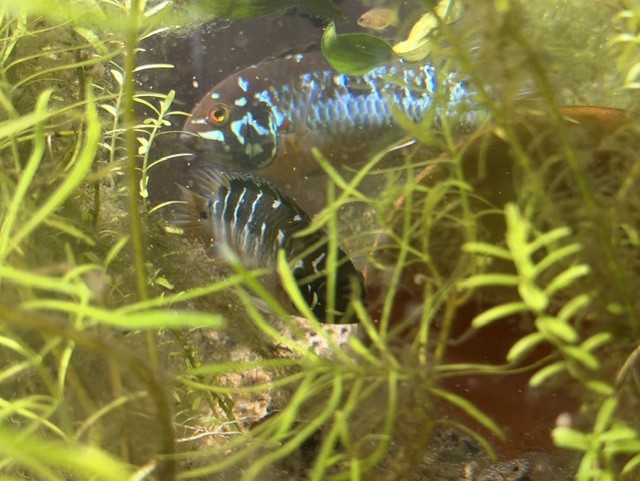
Care sheet
Ivanacara bimaculata
Quick care
If this came from a QR code or bag label, check these facts first.
Online care sheet: /fish/ivanacara-bimaculata/
Appearance
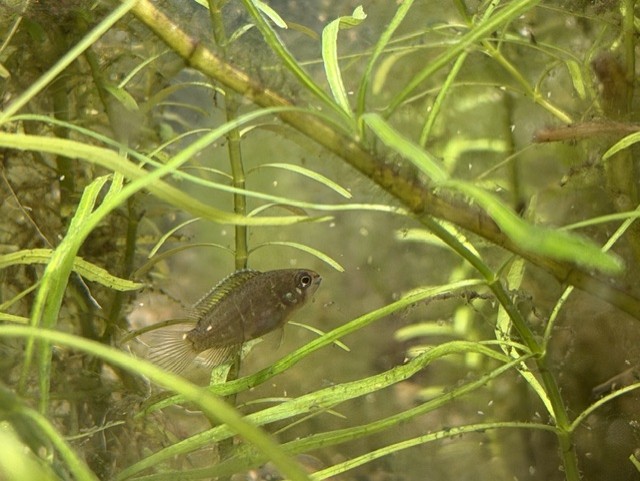
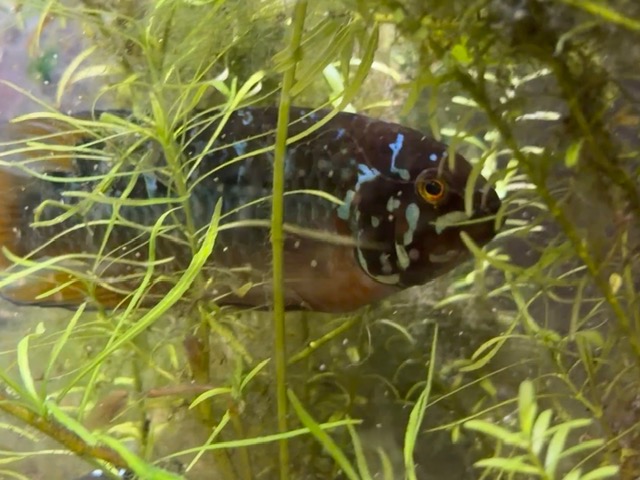
Males are much longer then the female. Their coloration is similar. When free swimming males do not play the primary role in safe guarding young.
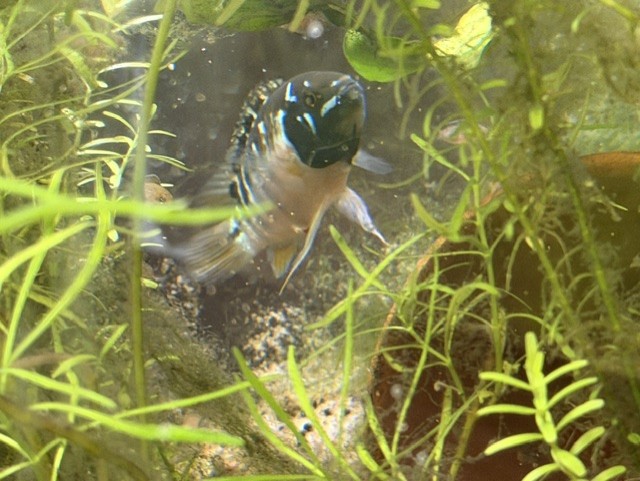
Females are very similar in coloration to males. The main difference is that their ovipositor (breeding tube) descends from the ventral area and it stays descended when mature. They are also significantly smaller then the male. The females are also the primary caretaker of the brood.
I originally purchased my pair from a store on the East coast and when they came to me at one inch, they weren't packed well at all. Both the female and the male were suffering from ammonia burn. The female was by far in the worst shape and was unable to even keep herself up off of the ground. Over the next three days the male started to recover but the female took four days to get to the point where she could actually hold herself up. If you're interested in how I handle ammonia burn in fish please consult the resource sheet. I state this because I want to illustrate something. Despite this, they both in fact recovered. These are very hardy fish but they have definite requirements. First and foremost they are not tolerant of ammonia. I would not recommend this fish if your considering keeping them in new tanks. These fish require established tanks and because of how new they are in the hobby, these fish have definite water requirements in order to stay healthy, breed, and thrive.
As far as water requirements are concerned these fish should be kept in 30 gallon long tanks or larger. They require a highly acidic, and soft water aquarium. I would recommend a pH of 5.5 - 6.0 with a hardness as close to 0 as the aquarist can manage. The fish can tolerate higher parameters but the viability of eggs goes way down if the parameters are not adequately met. My pair did not produce viable eggs for two years after reaching adulthood. Each time the pair laid eggs, they chose the backside of an inverted flowerpot in order to lay those eggs. They were conditioned using aquarium co op community pellet, spiralina enriched adult brine shrimp, hikari blood worms, and blackworms. They did breed every few months but they never produced viable offspring, until suddenly they did. Was it because they needed time to figure out how to reproduce or was it because of the circumstances that they came to me in. The truth is I don't have a really good answer to this.
The young are large enough to take newly hatched baby brine shrimp when they become free swimming. As is the case with most young fish, they also heavily benefit from heavily planted tanks. These tanks provide the environment for aufwuchs to thrive and heavily planted tanks provide a smorgasboard opportunity for when the hobbyist isn't directly providing brine shrimp.
Ivanacara bimaculata were model citizens, they did not destroy plants although they did frequently dig out depressions to house fry. They were kept in tanks with neon tetras as dither fish. They did not predate on the much smaller neon tetras and showed no aggression toward them until the babies became free swimming. From that point the female became very aggressive, frequently chasing and lunging at the tetras she deemed too close to the fry. I would not recommend keeping this fish with invertebrates. They seemed to be very attracted to invertebrates as sources of food. The male did not take a direct hand in the raising of fry, showed no elevated aggression and seemed to be disinterested in raising the fry he sired.