






Care sheet
Montezuma Swordtail
Xiphophorus Montezuma "Tamasopo"
Care sheet
Xiphophorus Montezuma "Tamasopo"
Quick care
If this came from a QR code or bag label, check these facts first.
Online care sheet: /fish/montezuma-swordtail/
Appearance
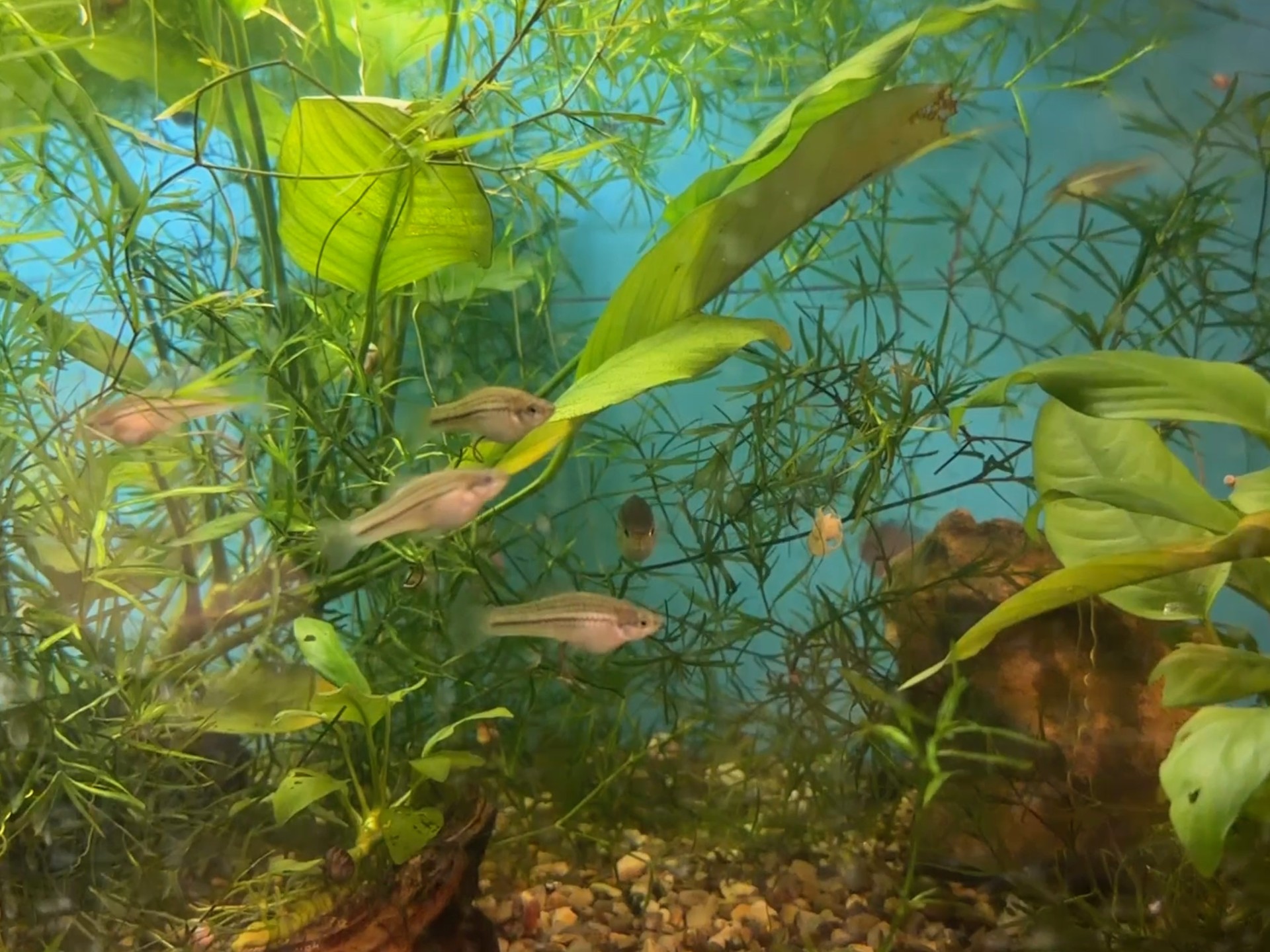
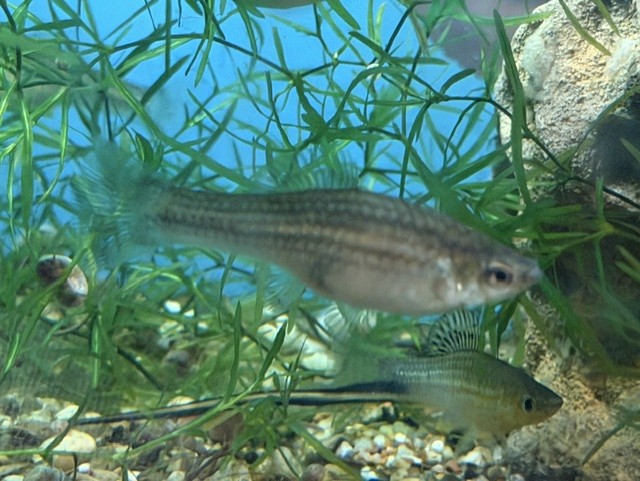
The juveniles strongly resemble adult females with the exception of not having a gravid spot.
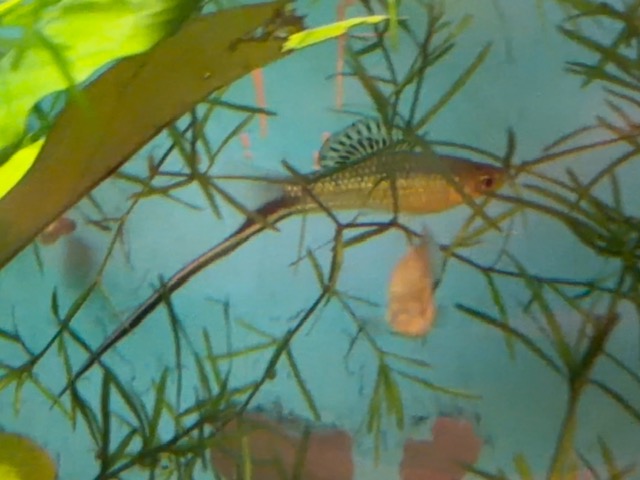
Adult males will have a sword that will be much larger than their bodies. An adult male will have a sword that is commonly 2 to 2.5 times it body size. Adult males are generally smaller then they adult females in body size.
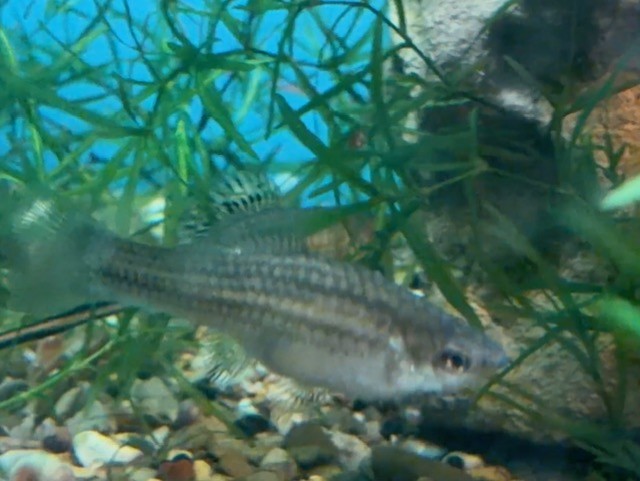
Females are larger with a dark spot at their ventral section. This spot is usually an indicator that they are carrying babies.
Xiphophorus Montezumae is also known as the king of swordtail species. It is a wild type of swordtail that is not mixed with a platy thus its color variations are fewer but it possesses by far the largest sword of the swordtails. While the male in body plan has a maximum size of about 3.5 inches, the sword on a Xiphoporus montezumae male from the Tamasopo collection point can be seven inches alone.
Xiphophorus montezumae is not an aggressive species but it has been this hobbyists experience that it is very shy. Unlike the cichlids who routinely forget that they are afraid when it comes time to feed them, Xiphophorus montezumae can be quite timid if your in the room and staring at them. Any sudden movements can send them bolting into cover. The montezuma swordtail very much benefits from a thickly planted tank. As a livebearer the fry are born really small and its not unheard of for the tiny fry to be predated upon by other adults in the tank. Thus it is highly recommended that should you keep these swordtails that you heavily plant a section of the tank so that the females when they are ready will seek out the dense cover in order to give birth to young. In that dense cover the babies will have a fighting chance to survive the predation of adults. Najas, or guppy grass, is an ideal candidate for planting in the tank as it will grow thick, can be cut up into new stems and planted again in order to have a very thick and very lush area of the tank where fry can not only hide but also can prey upon aufwuchs before they are detected by your the hobbyist. Though small the fry can readily feed upon baby brine shrimp and do not require special foods. I have also had great success raising Montezuma swordtail fry in densely planted tanks thus there is really no reason to remove fry from the tanks they are born in should you decide to grow them out. The fry grow very slow and will take seven to eight months before they begin to differentiate between males and females. Females tend to reveal themselves at the end of the six month and a gravid spot will become readily visible. The first clear sign in males is the formation and thickening of the sword at the bottom area of the tail.
It is highly recommended that the hobbyist getting these fish for their home aquaria make certain that they know the collection location of the fish that they are going to purchase. There is a high degree of variability in those collection points and its best to NOT mix them. Additionally, do NOT mix these with other types of swordtail as they will readily hybridize, hybrid swordtails can be extremely hard to detect. Due to the fact that these swordtails are rare, a premium can be expected on the price of the fish. This has had very bad actors in the hobby take advantage of hobbyists getting into Montezumae swordtails. Before bidding it is highly recommended that you ask questions from experienced livebearer hobbyists and seek out additional guidance if your wanting to purchase these swordtails and do not know if the swordtails themselves are from a pure line. One resource that may help you determine if your line is pure is the XGSC. It worth noting that the XGSC is run by Texas State University and as an academic institution has a reputation to uphold. As they also continue to fund their research by selling Xiphophorus lines its highly recommended that you consider them when getting your stock.
This is a hardy species in the home aquaria and its been my experience that they are very tolerant of a wide variety of conditions and temperature swings. Additionally this species seems to benefit from hard water. It is highly recommended that if you don't have hard water that you supplement your water with the Magic Shell aquarium conditioner as they seem to do much better in mineral rich water. Finally it is highly recommended that this species be kept in tanks that are 38 gallon long or larger. This species does seem to require some space in order to move and movement in water currents does seem to be appreciated as long as its a gentle flow.