






Care sheet
Green Swordtail
Xiphophorus Helleri "Rio atoyac"
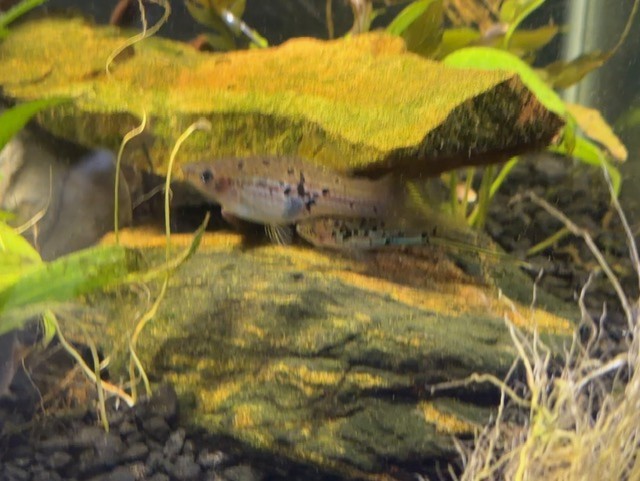
Care sheet
Xiphophorus Helleri "Rio atoyac"
Quick care
If this came from a QR code or bag label, check these facts first.
Online care sheet: /fish/green-swordtail/
Appearance
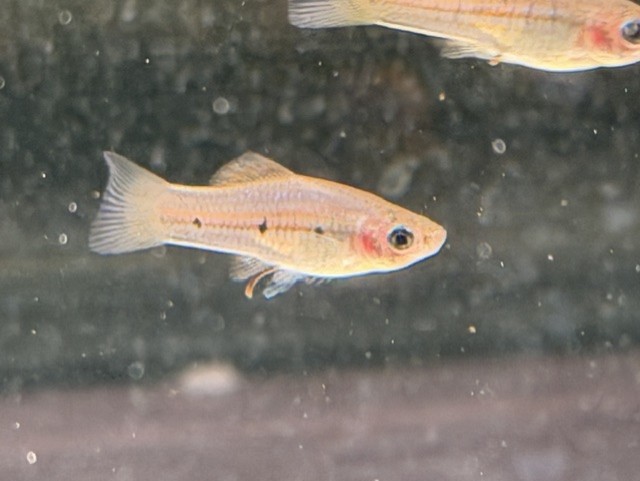
The juvenile form of the green swordtail is indistinguishable from the female form in both color and morphology. At the fifth month, the first signs of a gonopodium begins forms. Simultaneously the sword begins to thicken and elongate.
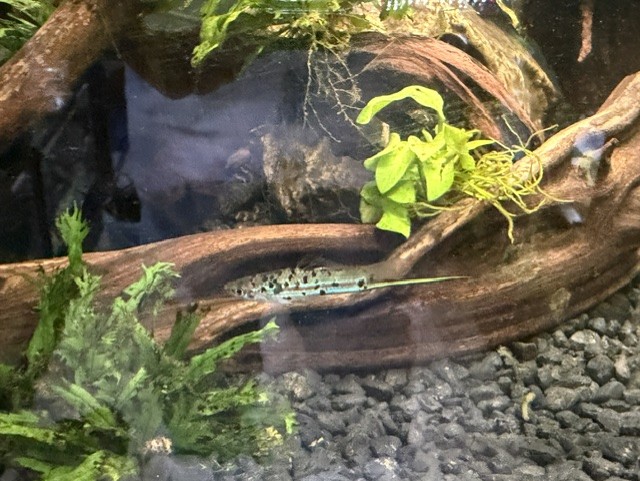
Green and sometimes red striping, with intermitted black dots speckling the flanks. A sword that can be a little bit over as a maximum of their body length can develop below the tail.
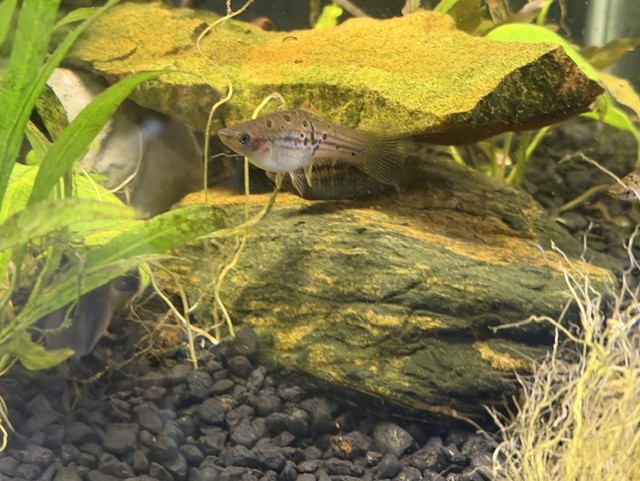
Females are a bit larger in body size, a lot more subdued in appearance and can also have a large spot near the anal fin when carrying brood.
When I first acquired my line of Green Swordtails, Xiphophorus Helleri "Rio Atoyac" F1, I placed the male and female into a 20 gallon tall tank. At the time, the female had a gravid spot but was not yet of the shape where I was expecting baby swordtails to drop from her. For the first three weeks, I aggressively treated her and the male for parasites and I really wasn't concerned about collecting babies quite yet. Still I during the quarantine period I found three in the tank. After quarantine ended and over the next six days she began to swell being fed high protein foods and on a diet of live blackworms and frozen spirulina enhanced brine shrimp. Like all new arrivals I spent quite a bit of time in front of the tank and noted that the male was everywhere and her shape was beginning to distort. This isn't unusual for female livebearers so at first I wasn't alarmed. Three more days passed and her body was so distorted that I feared that I may have ended quarantine too soon and that what I was witnessing was in fact dropsy. It was then upon consulting the notes for the new tank that I realized the male was always pursuing the female and a thought occurred to me, she wasn't dropping babies because she was constantly being harassed by the male. A twenty gallon tall tank has a foot print that is only slightly bigger then a ten gallon. I immediately removed the male to see if that would allow her to feel comfortable enough to release her babies. That night 17 were born. In the morning I found the 17 and removed them. The next night 18 more were born.
Upon reflection, my recommendation for anyone wanting to keep these is to make certain that your tank is in fact big enough in floor plant to handle males and females. I would still recommend a 20 gallon as a satisfactory tank but I would recommend a 20 long, not a 20 tall. Upon reflection the female continued to drop babies each day for two more weeks 1 to 3 at a time. Her body size stopped the exaggerated swelling after one week she was back to a normal swordtail female form. It is my opinion that had I not intervened I would have lost her and the male would have literally pestered her to death trying to breed with her. For this reason I would recommend that anyone acquiring these also do so with a minimum of a one male to three female ratio. They were sold to me one male and one female but I think this is not optimal. If you can I would purchase more females then males. If you do this, no one female would be focused on and harassed as much as mine was.
It has been my experience that livebearers have a habit of cannibalizing their fry. I prepared for this by having an outer periphery that had swimming areas and densely planted tanks in the middle. The plants that I elected to use for this tank was guppy grass (Najas) and hornwort. They were allowed to grow in densely to provide fry with a refuge. It is highly recommended that the aquarist heavily plants tanks that swordtails are kept in. The plants help the swordtails feel secure but more importantly they provide surface area that aufwuchs can grow upon. These aufwuchs are the first foods that fry when born will hunt down and it gives you time to notice them, find them, and remove them for their safety. It also provides with the fry with protection as they can go through due to their small size but their parents can't easily do so.
"Wild Type" will often contain collection info "Rio Atoyac" means that the line was caught in the Rio Atoyac river. F2: Is short hand in the hobby for second filial. This means its two generations previous from the wild. F1: Is short hand in the hobby for first filial. This means it is one generation from the wild.