






Care sheet
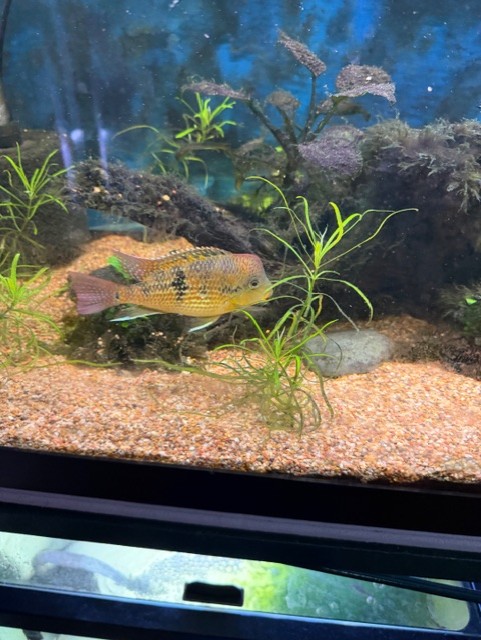
Gold Dust Earth Eater
Geophagus sp. Alto Sinu
Care sheet
Geophagus sp. Alto Sinu
Quick care
If this came from a QR code or bag label, check these facts first.
Online care sheet: /fish/gold-dust-earth-eater/
Appearance
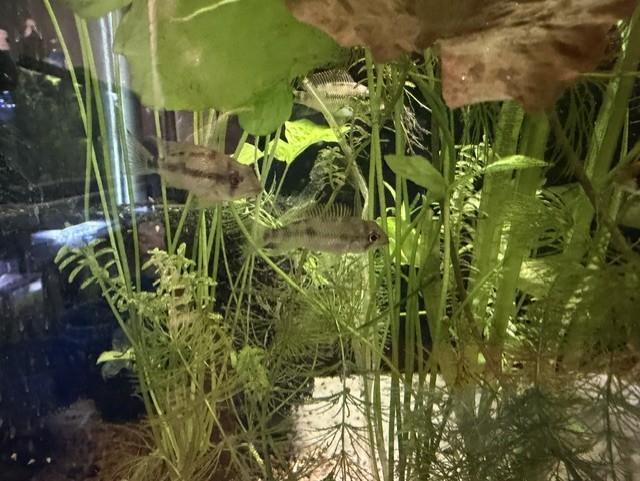
The juvenile appearance is identical to the female in coloration.
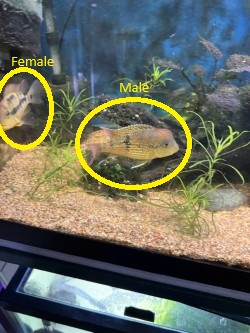
Males will begin to develop a sharply sloping snout, their colors will intensify, and they will exhibit a behavior where they will develop an "O" with their mouth held open and will display by shaking back and forth in rapid movements. Males may also develop a nuchal hump and become aggressive to others during breeding.
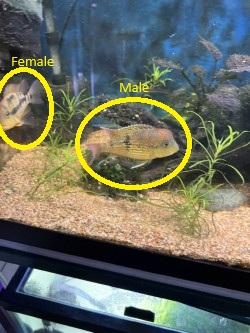
Females retain juvenile coloration and possess rounded faces.
These fish should be provided with sandy bottoms to which they can engage in their sand sifting behavior. They will scoop up sand and expel the sand through their gills sifting it for organic pieces that they will consume. Males will engage in a dance where they will open their mouths wide into an "O" shape and they will shake their heads vigorously back and forth both in a display of aggression and to impress the female fish.
This fish is a female mouthbrooder and after breeding has occurred it is highly recommended that you wait three days before attempting to remove the female from the tank. Females should be removed from the tank otherwise you run the risk of the female not feeling secure enough to release the fry. Females that do not feel secure will hold the fry to the point of killing them from a lack of sustenance if she isn't otherwise removed. Waiting a period of three days also prevents the female from feeling compelled enough when chased to swallow he eggs.
Remove the egg carrying female to a 30 gallon long footprint tank that is planted. When the female feels secure she will release the babies and oversee their care. She will pick them back up if she feels insecure, this is very reminiscent of African cichlid behavior. Once she starts to wander away from the babies it is time to remove her. The babies once free swimming will actively chase down and consume newly hatched brine shrimp. This species tends to grow in spurts and can take a long time to reach full maturity.