






Care sheet
Congo Spotted Pufferfish
Tetrodon Schodenti
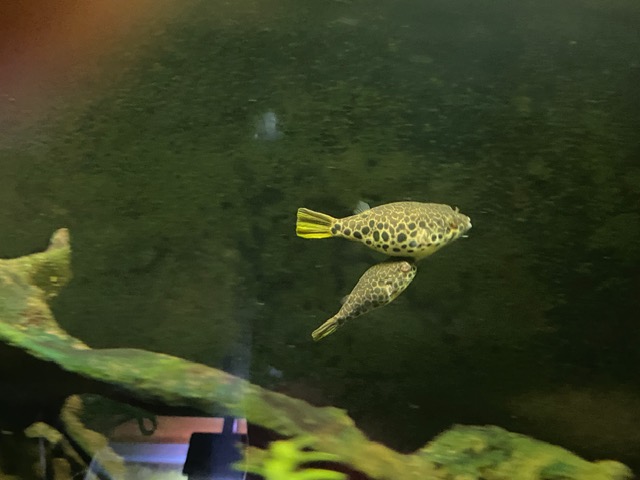
Care sheet
Tetrodon Schodenti
Quick care
DO NOT take out of water! This species should always be submerged.
If this came from a QR code or bag label, check these facts first.
Online care sheet: /fish/congo-spotted-pufferfish/
Appearance

Larval, never observed past day five.
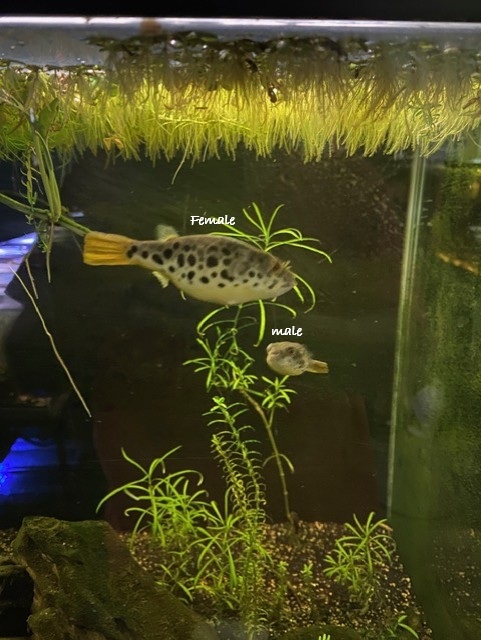
Shorter then the female, less round and more elliptical in body plan.
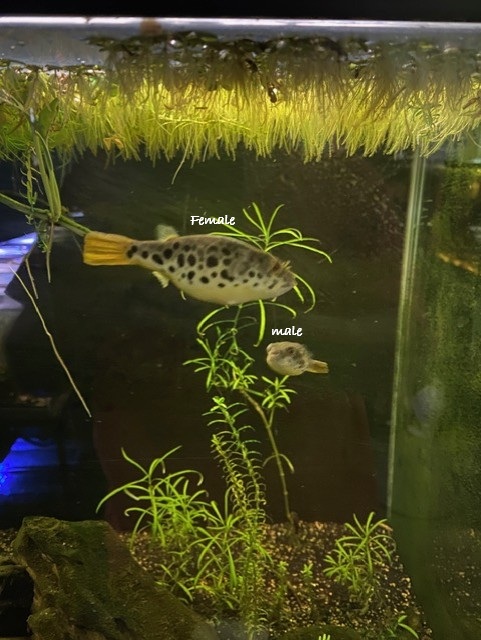
Larger then the male, more round then elliptical in body plan.
Tetraodon Schoutedenti, or the Congo Spotted Pufferfish, is a peaceful pufferfish that is very colorful and has a relatively tolerant demeanor towards members of its own species and other fish in the tank. Like most aquarium fish it will greatly benefit from clean water, plenty of room to swim in, and highly oxygenated water. They are very tolerant of hardwater and pH around neutral. As they come from one of the most strongly flowing rivers in the world, their aquarium should always contain some degree of movement. While I wouldn't put them as a strong current requirement, it was my experience that they enjoyed the flow that a powerhead and a hang on the back filter could provide as they swam in and out of this current.
The Congo spotted pufferfish will eat hikari vibrabites; however, it is done without enthusiasm and usually only taken out of the water column. The vibrabites that fell to the ground were left to rot. In order to supplement its diet, I tried clams on the half shell. This was shredded and mainly spat out so I quickly learned that this was not a food that the pufferfish was very interested in consuming and it became a significant source of water fouling. As such I do not recommend that you feed this to your Congo spotted pufferfish. Live blackworms were eagerly consumed as were mealworms. However nothing made my pufferfish more animated then when they saw snails. My pufferfish let me know this early in the quarantine process when in a tank across from them some snails were placed into a breeder box. The two pufferfish then proceeded to try to push their way through the glass wall in order to get at these snails. It was rather hilarious to witness but it taught me a very important lesson. That lesson was that these pufferfish are snail predators and that snails likely make up the majority of their diet in the wild. While I set up every tank in my fishroom to breed ramshorn snails, I tried feeding my Congo spotted pufferfish grass shrimp. The result of this was rather comical in hindsight and horrifying to witness. It was comical because it became clear that their lunges at shrimp were the clumsiest attempts at predation I had ever witnessed. It was absolutely comical to see how they would try to strike with their bodies only to have the shrimp jerk out of the way for hours on end. However it also became horrifying as when they lunged, they would often hit plants and chop them from the stem. They didn't mean to hit the plant, they were always aiming for the shrimp. However the shrimp were too fast and they were more often then not on the plants. I quickly learned that when you fed shrimp, they had to be placed in a net or a container to improve the Pufferfish's chances at scoring a meal. This greatly improved their success rate and it also kept my plants alive. As Congo spotted pufferfish eat live foods, it became apparent to me that routine medical quarantine might be something that is very necessary in his species. My breeding group of four pufferfish would be treated for intestinal parasites every nine months with Metronidazole and praziquantel (General Cure). This kept them very healthy. It also became very apparent once I started to keep Congo Spotted Pufferfish that these fish also required rocky structure similar to that I would create for african cichlids. The female fish would swim in the open column but the male would hide out among the rocks and would be constantly looking up when not eating. He was looking for females to make with and when they swam close to where he was lurking he would run out, bite them, and engage in a mating practice where he would just hang off of them. The females would panic, run about the tank and tire themselves out dragging him. When they got tired, he would swim violently up lifting him and the female out of the water and that would cause bursts of eggs to be released and presumably fertilized by the male. They eggs were not sticky and would scatter in the current. The other pufferfish would eat those eggs if they weren't quickly collected upon release. Unfortunately when the young are born, they seem to be born with a very small or non existent nutrient pouch as such they need to feed almost immediately. They also appear to be very small. They are too small to eat vinegar eels, brine shrimp nauplii or derro worms. I suspect they needed to be fed something akin to paramecium aurellia but sadly I didn't get to test this theory. As one of the batches of live foods that I brought in also brought in a fish that carried in a pathogen. Sadly I lost three of my puffers within a week of discovering the dying fish in the pufferfish tank. I mention this because potential pufferfish keepers need to be ready for this reality. If you decide to take on this fish, you will need a large supply of live foods. An adult Congo Spotted Pufferfish can go through 5 - 6 snails per day. They create enormous amounts of waste as well in the tanks that they are in. Most of my puffers would consume the whole snail. The male however only ate the fleshy food and left the rest of the snail to rot away in the shell. Each puffer required 5 - 6 snails per day. I state this because any breeding project attempted would also require more snails to feed the babies as they grew. This is something to think about if you wish to attempt breeding the Congo Spotted Pufferfish. Finally I want to stress that should you decide to keep one of these very personable pufferfish, I would recommend strongly that you develop a plan to always keep them in water. When you move them, they need to swim into a container. You don't want to take them out of the water as that might induce the "puffing" reflex. Once they puff up, they can't always release the air and this can be a death sentence for them. So keep them under the water at all times. You will also sometimes see them take in water in this puffing reflex. Why they do this, I am not sure. Some believe they are exercising the puffing muscles but as long as they are underwater don't immediately be alarmed if you see them start to jerk and grow bigger this is actually fairly normal if very infrequent behavior. As they gulp in water, they don't rise to the top either.