






Resource
The Family: Cyprinidae
What are the key characteristics of the family Cyprinidae?
Quick answer
Members of the family Cyprinidae are known by the absence of teeth in the jaws, the presence of pharyngeal teeth, and the Weberian apparatus.
Photos
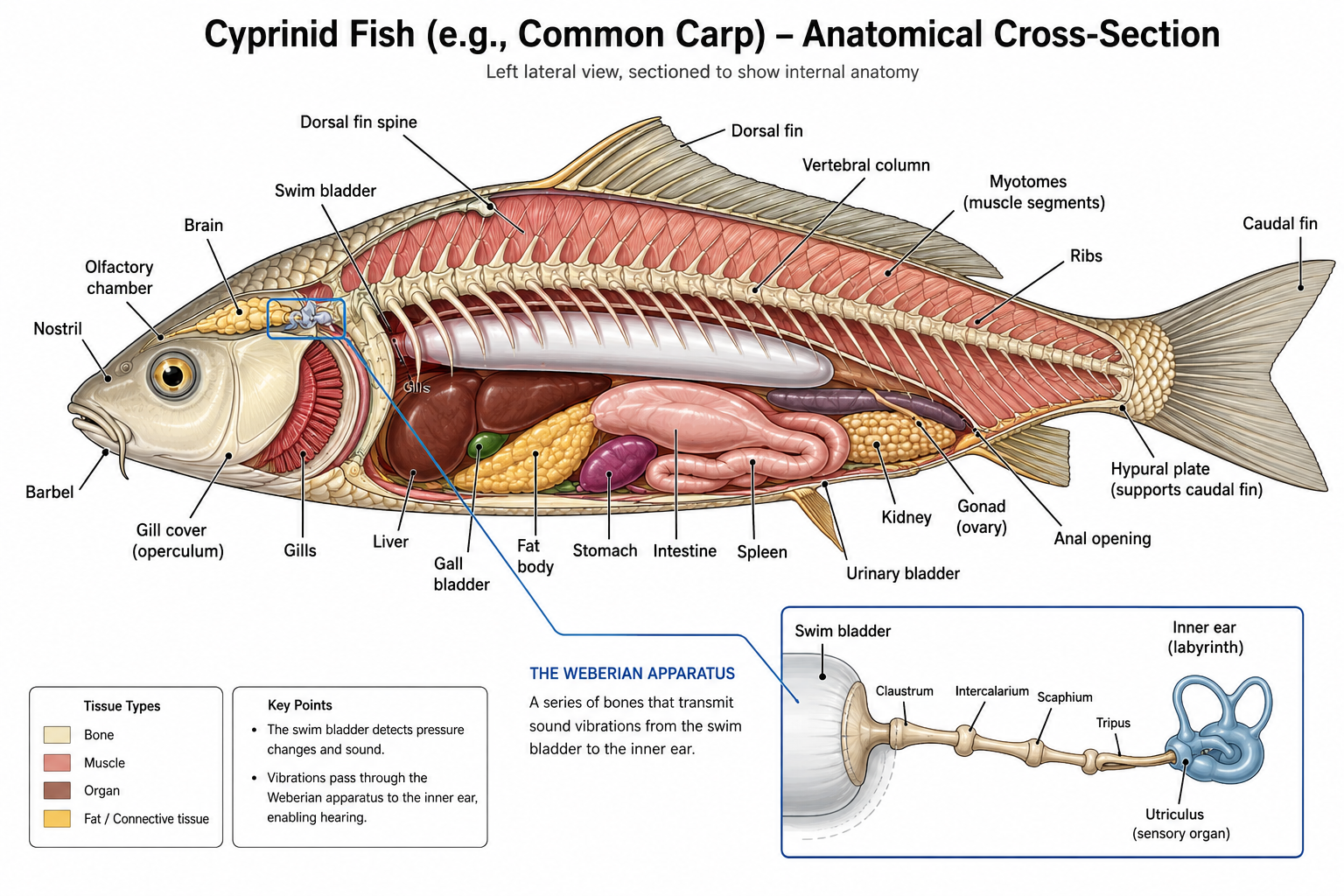
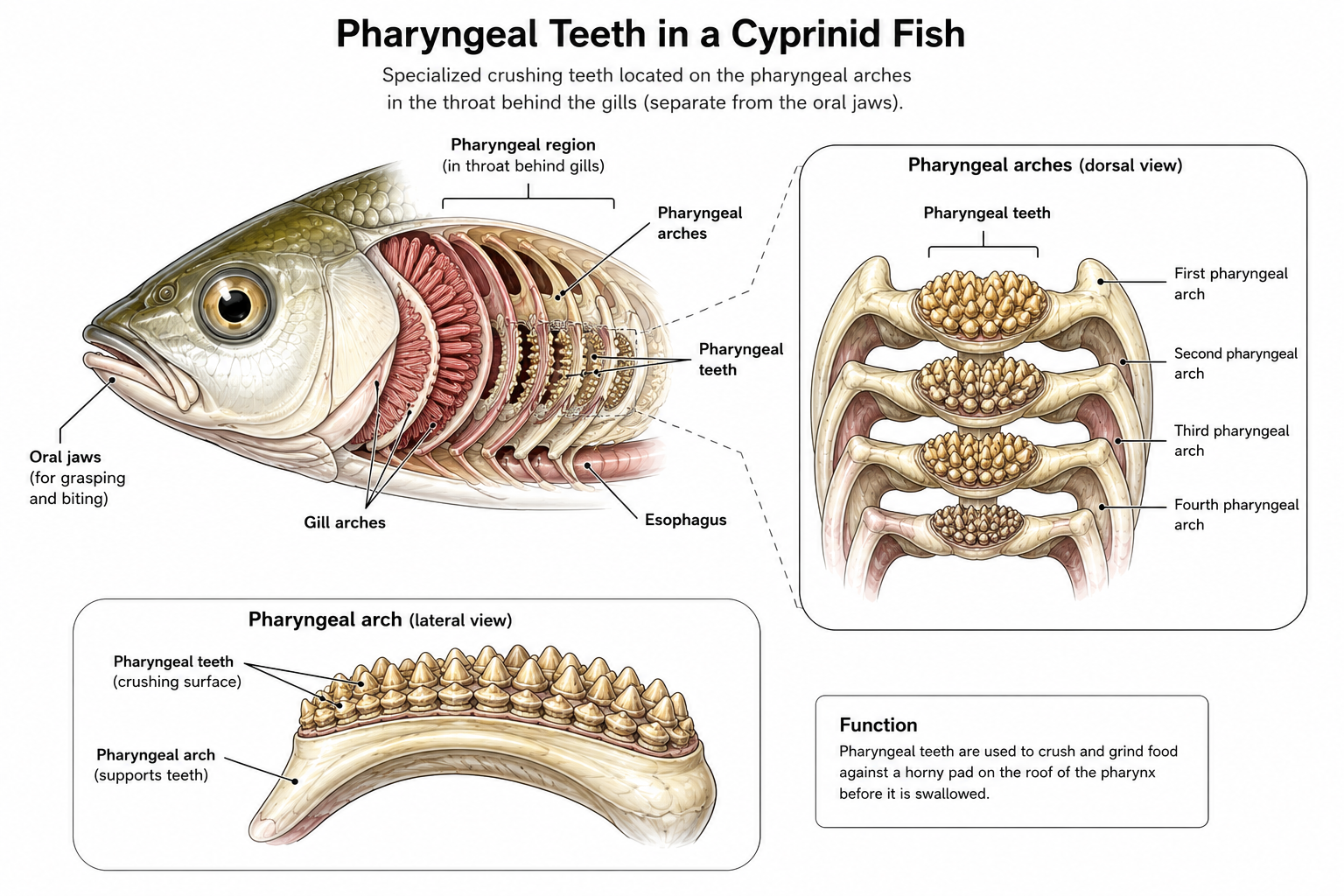
The family cyprinidae is the largest known family of fish with 3000 species officially scientifically described. They are found native to North America, Europe, Africa and Asia. Recent scientific evidence through genetic studies indicate that the closest marine relative to the cyprinidae is actually the Ariidae (catfish). The family is characterized by having toothless jaws, pharyngeal teeth and the Weberian apparatus. Additional characteristics commonly found in members of this species is the lack of an adipose fin and the presence of a soft-rayed dorsal fin. Additionally many members exhibit smooth overlapping scale pattern and have sensory barbels that allow them to search for food in low visibility on the bottom.
In the home aquarium examples of iconic cyprinidae is the tiger barb, the panda garra, the celestial pearl danio, the cherry barb and the gold fish. The smallest known Cyprinid in the world is Paedocypris progenetica. Members of this species can be a s small as 7.9 mm in size. The largest cyprinid is the giant barb, Catlocarpio siamensis, and can grow to lengths of three meters and weigh in excess of 300 kg. The Weberian apparatus is a specialized chain of small bones and ligaments that connect the swim bladder in cyprinids to their inner ear. The function of this organ system is to act as an acoustic amplifier, allowing for superior sound detection and signal amplification that allows the fish to have extraordinary hearing capability.