






Resource
Propagating Taiwan Water Lilly/Red Tiger Lilly
Lillies can be one of the most beautiful and useful plants in your planted tank. Recognizing when you can propegate them from the mother plant can save you money and improve your water quality.
Quick answer
Look for roots growing from the mother plant in the water column, follow the roots to the fragmentation point. Cut the daughter free and replant each plant.
Practical steps
- Recognize When the Plant is Ready.
- Uproot the mother plant.
- Look for Daughter Plant growing from the Mother Plant.
- Cut the Daughter Plant from the Mother Plant.
- Plant the daughter Plant
- Plant the Mother Plant
- Add fertilizers.
Photos
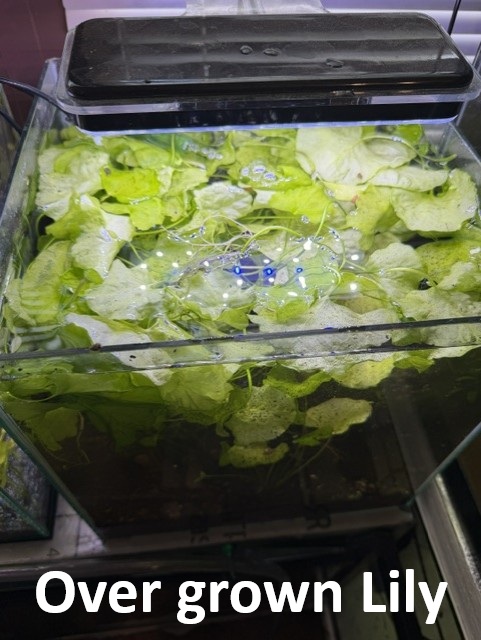
When plants begin to crowd each other out, its really past time for you as the aquarist to take charge and thin it out. Picture one shows what happens when you let it grow out to out of control levels. The good news is that the lilies especially have a habit of siphoning off nitrates from your water and integrating it into their rapidly growing tissues so having a thick blanket at the top of water lilly like in Picture 1 is actually great for water quality. What isn’t all that great for the aquarium however is that this thickness at the top will prevent oxygen flow by restricting surface water agitation. Thus it becomes necessary to trim the Lilly back and if needed now we are going to cut the daughter plants off of the mother plants.
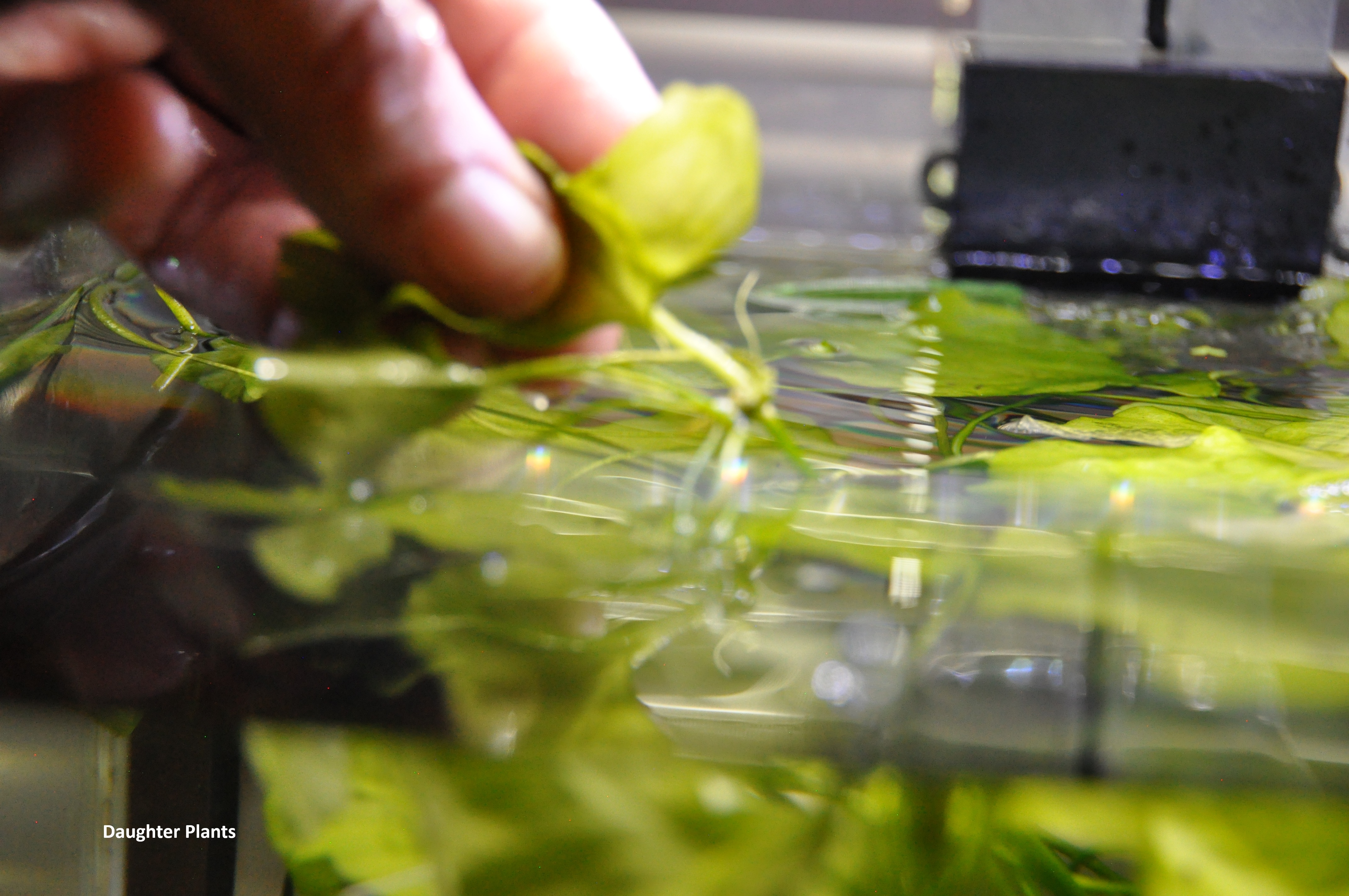
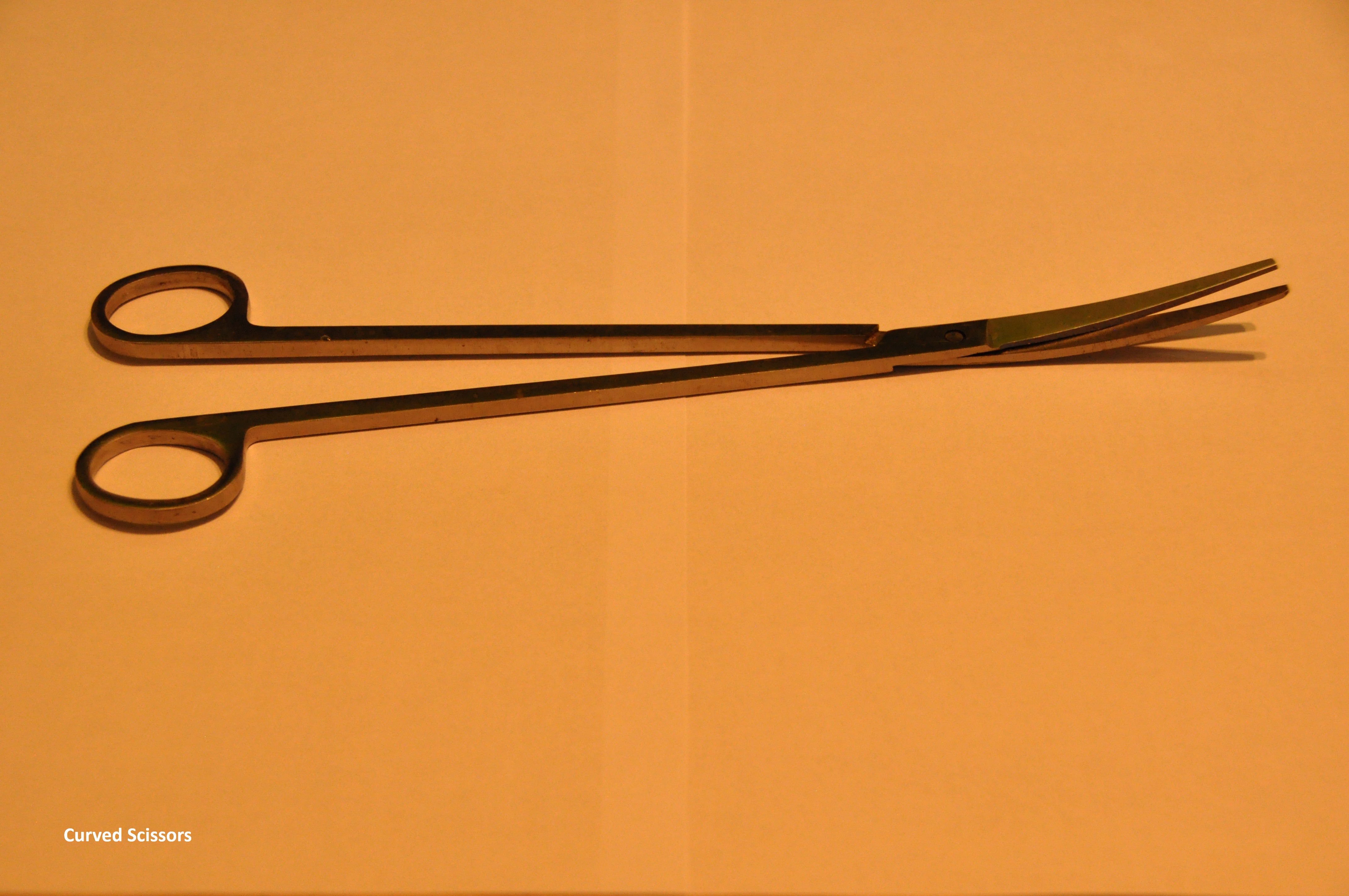
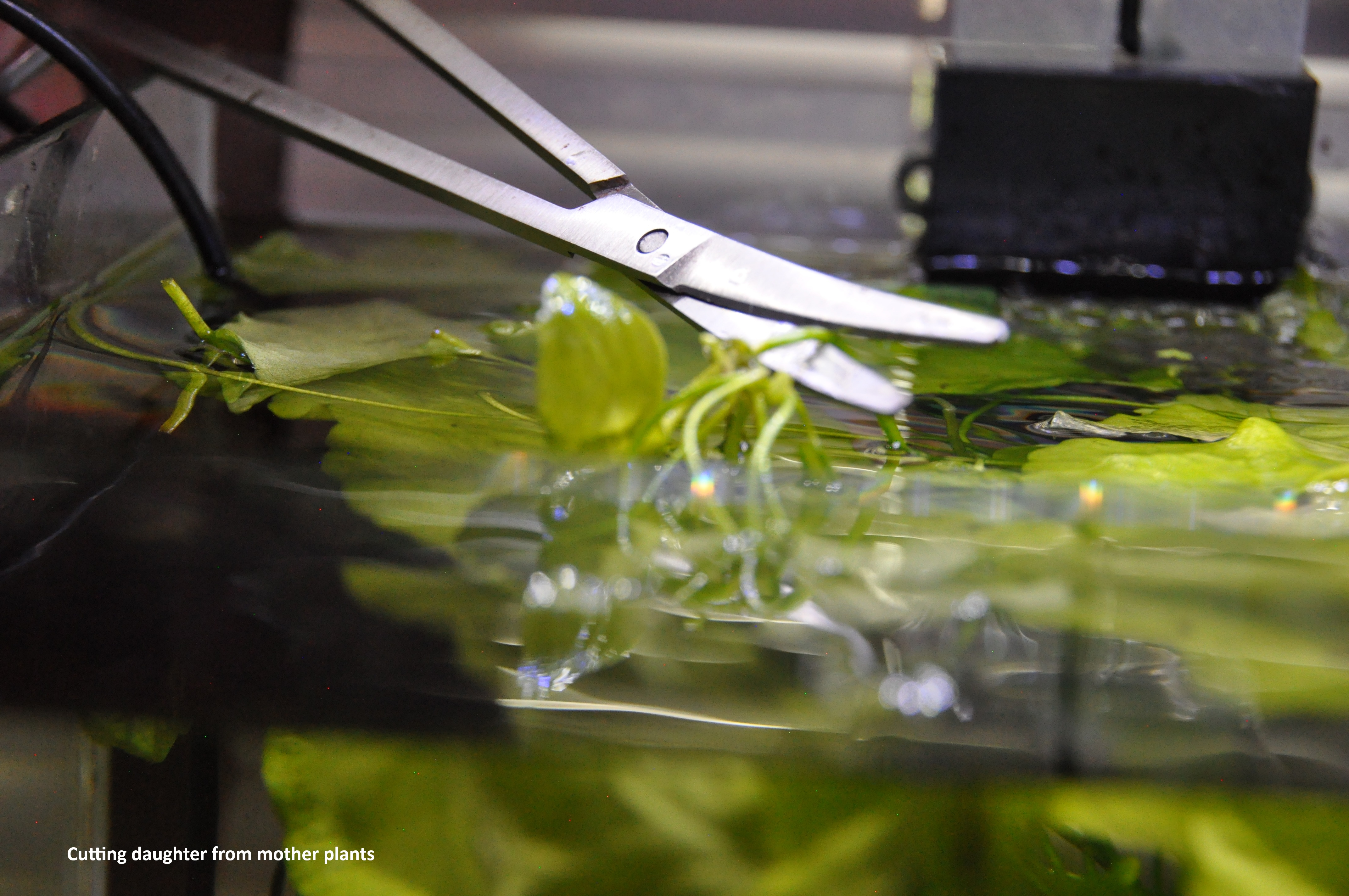
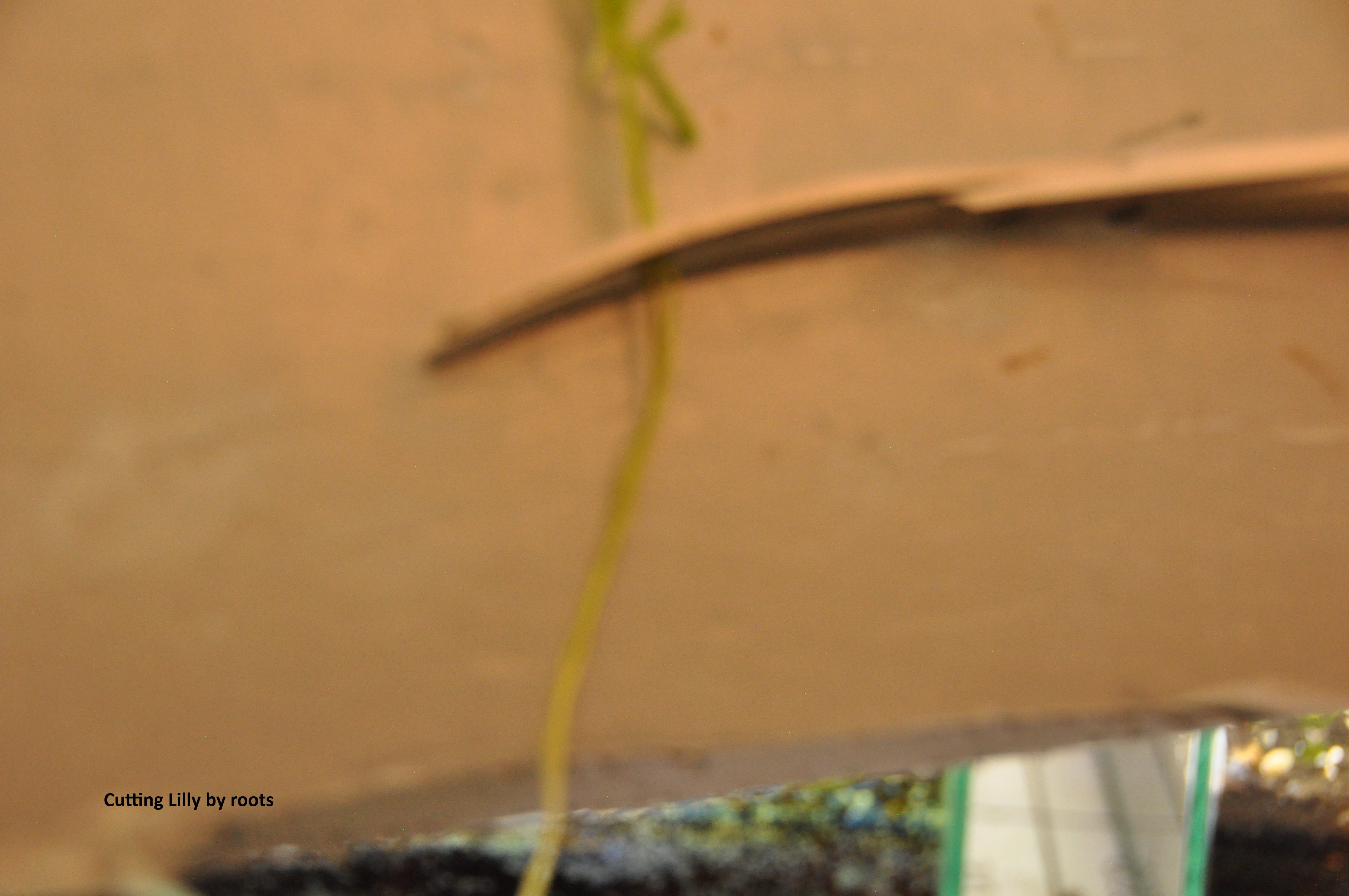
To do this I am going to uproot all of the plants. A word about this. I am looking in this instance to propagate this plant across multiple aquariums. As such I am choosing to uproot it here so as to better examine the lilly for daughter plants that are forming. The first thing I am going to do to the mother plant is cut the roots. This will allow me to have an easier time replanting it and it will also stimulate new root growth in the plant. My next step is to examine the plant for daughter plants. You will recognize a daughter plant by roots starting to grow higher in the water column. Here is an example of a daughter plant (Picture 2). Free the daughter plant by using the scissors (Picture 3) to sever it from the mother plant (Picture 4).
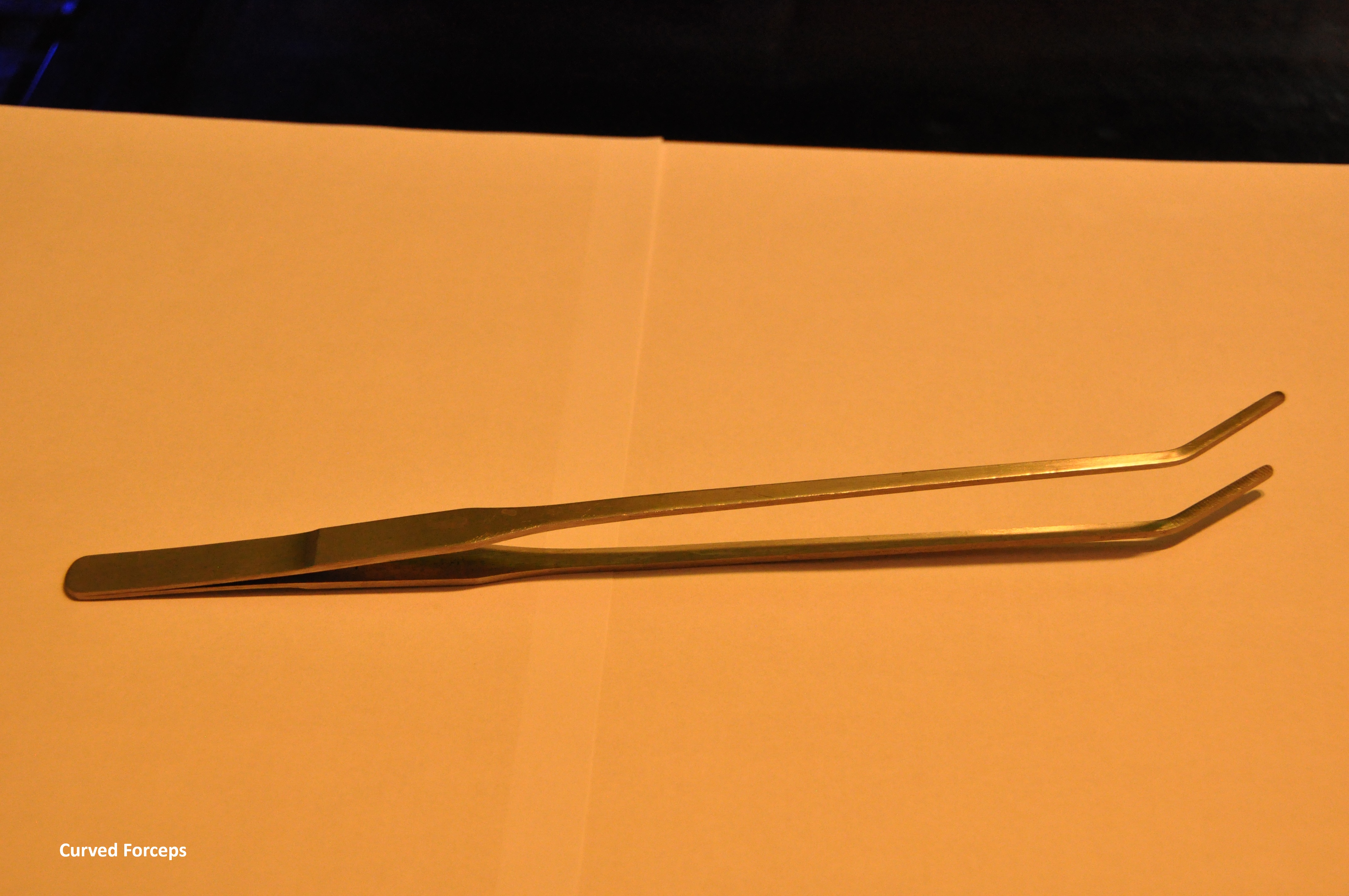
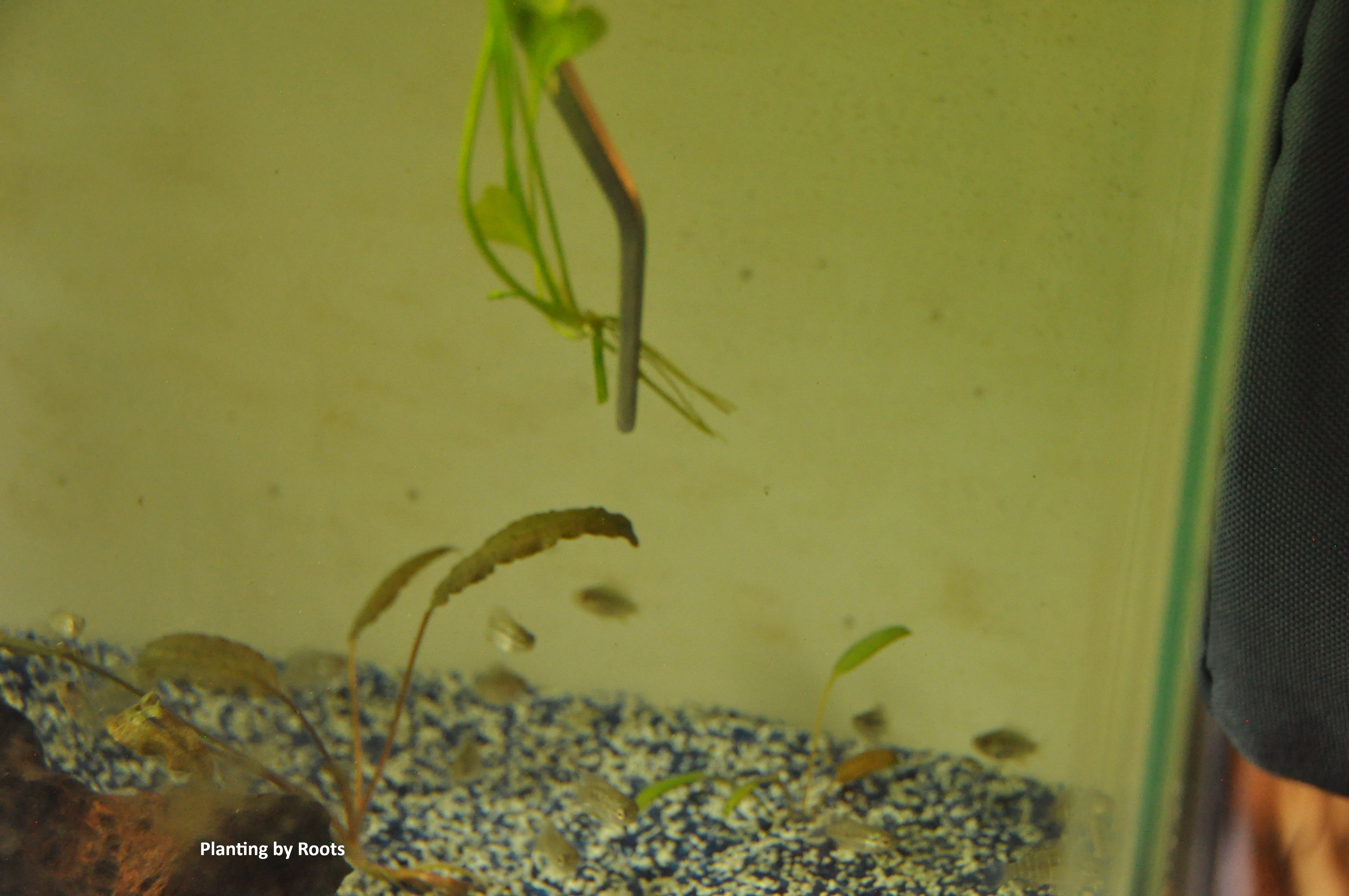
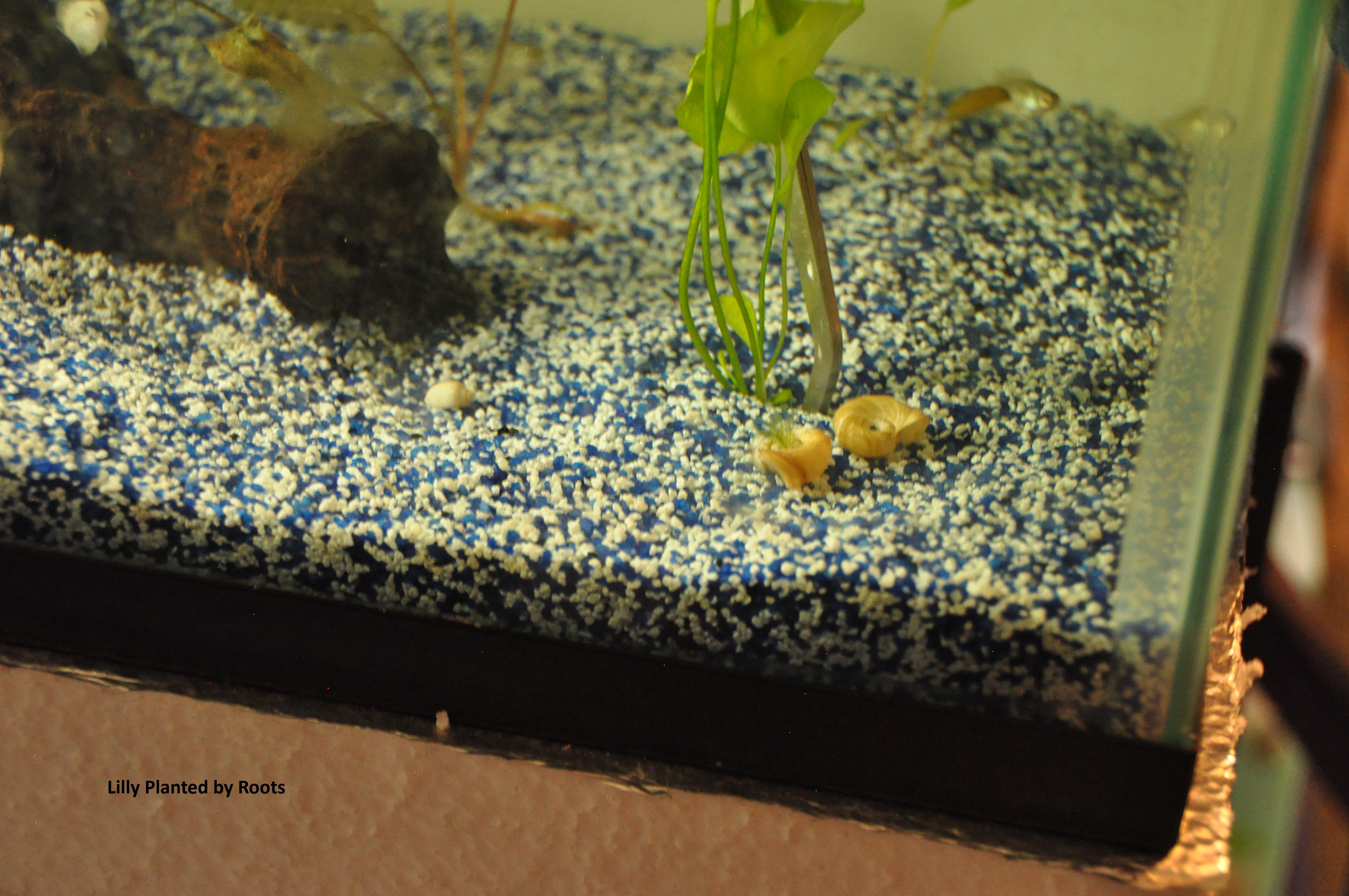
Next I will use a curved forceps from Aquavitro (Picture 5) to grab the daughter plant by the newly forming root ball and I will use the curve to place the plant where I want it to sit beneath the sand. The curved nature of the forceps helps you plant the roots (Picture 6) in the place you wish it to go while allowing sand to cover those roots. Therefore when you release the plant, it doesn’t come shooting up as the sand will cover it pretty much instantly (Picture 7). With straight forceps the plant usually comes up before the sand can enclose it. Next place the mother plant the cut roots will allow you to more easily place the plant where you want to place it (Picture 8).
With both plants now in place, administer fertilizers and make certain the CO2 if you have it is charged and flowing as it will greatly aid your plant’s recovery and growth.