






Resource
Ammonia Burn: Here is What to Try
What to do when your fish are dying from Ammonia poisoning or burn.
Quick answer
The steps to take to try to save your fish.
Photos
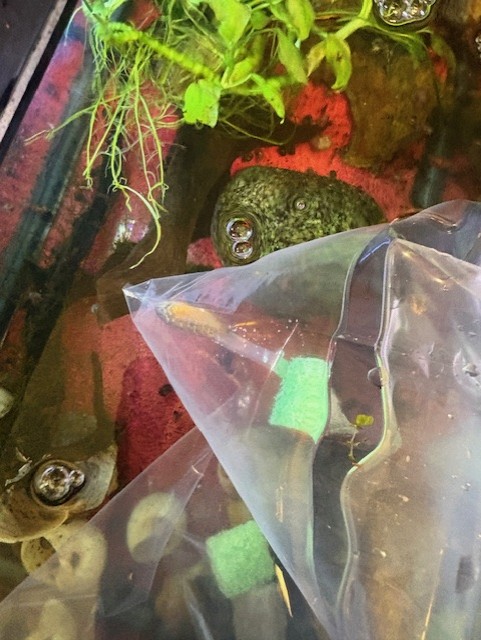
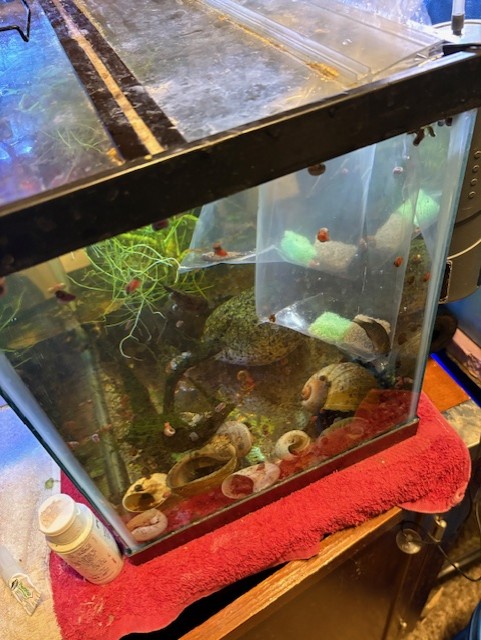
There are times in the hobby when despite your best efforts, your fish can be exposed to ammonia in the water. Despite your best efforts and sometimes owing to factors outside of your control your fish can sometimes be exposed to toxic ammonia. Prolonged exposure to ammonia leads to a condition called ammonia burn. Unfortunately exposure to ammonia is quickly lethal in fish. When fish are exposed to ammonia and burn some things happen. First they become lethargic and are unable to move correctly. They lose control of their body, you will see them losing their ability to orient themselves and keep themselves upright. The respiration rate can increase and gradually as they begin to die, fade away. Red streaks will appear on the fish and in the gills. You will often find them hiding in a nook or cranny somewhere in the decor where they begin to pass away. Most of the time when it gets to this point, there is no saving the fish. That is the bad news.
The good news is even in the worst of circumstances (as shown in the pictures above), as long as the fish is still breathing, there is some things you can try to save their lives. First and this becomes fundamentally important you must get them out of the situation that is causing the ammonia exposure. In the case of a tank, a very large water change, 30 - 50% of the volume with dechlorinated water is the first step you need to take. The second step is to increase the filtration. If you have a double sponge system that is cycled and running, take one of the sponges from the old system and put it into a new filter in the tank with the ammonia spike. In a double sponge system like this one by hygger, this allows you to instantly begin converting ammonia in the tank with the spike. In the old tank you will add one of the new spare sponges to replace the one you took. Next use two drops of seachem prime per gallon on the tank withe the ammonia spike. This will buy you time by locking up the ammonia and converting it from ammonia to ammonium. This is a temporary measure it only lasts a day. If your fish are being burned because they were shipped poorly as is the case with the Ivanacara bimaculata that I received in 2024 from a source on the East Coast, get the fish out of that bag as soon as you possibly can. Make certain the fish is in good, clean water with an established filter and do not allow the foul water to enter the quarantine tank.
The rest of the steps are the same no matter what the location. The third thing that I would recommend that you do is increase the aeration. The reason your doing this is that ammonia burns the fish’s gills and thereby damages the ability for the fish to take oxygen out of the water. You are increasing the oxygen so that it is in greater soluble concentration in the water. The next thing your going to do is add 5 mL of Methylene Blue per 10 gallons of water. Be careful with this step, methylene blue will stain anything it touches including you, your clothing, and sometimes aquarium silicon. The reason your doing this is methylene blue aids in oxygen transport in the blood. It also helps to reduce the damage by acting against the agents of infection that might use this as an opportunity to attack the weakened fish. Next you are going to cover the tank completely. Use a towel that will completely cover it. Your doing this to blackout the tank so make certain that the light if on the tank is not going to come on during the next few days. The reason we are doing this is to reduce stress as much as possible on the fish. Think about when you are sick, hopefully your not out partying and exerting yourself. Hopefully what your doing is resting. This is what we are aiming for here. We want the fish to rest and “sleep.” We want to reduce the stress on them. Stress in this state is a killer. Don’t feed them for at least two days and only take off the towel for the amount of time it takes to make certain that the fish hasn’t expired and recheck the water chemistry. Make certain that the filter is still keeping up. Methylene Blue can attack filter bacteria but at the concentration we are using it shouldn’t prevent it from doing its job. Once the fish is no longer clamping fins, laying on the ground and is right side up, you have turned a significant corner. As quickly and as stress free as you can, do a water change of no more then 20%. Feed the fish now live foods if possible. Blackworms here are ideal because their movement will induce the fish to feed. They are also ideal because they won’t immediately die until the fish decides to consume them.
If you are getting these fish from a store or from an online source over the mail do NOT start quarantine medication for a while. Quarantine medication can be rough on the organs of the fish. Give them some time here to recover. Make certain that the fish has recovered physically, resumed normal behavior for that type of fish, and are eating before you begin the medication trio for quarantine. If the fish has shown no sign of having contracted Ich or Epistylis, I would forego the IchX. I would forego it because if the parasites were present, it would have showed up during this ammonia burn period when the fish was at its weakest. When you decide to use the quarantine medication as a preventative measure, I would run both General Cure and Erythromycin one after the other but not concurrently.